Teachers are dipping into their own pockets for school supplies and working side jobs as an election-year pay battle turns ugly.
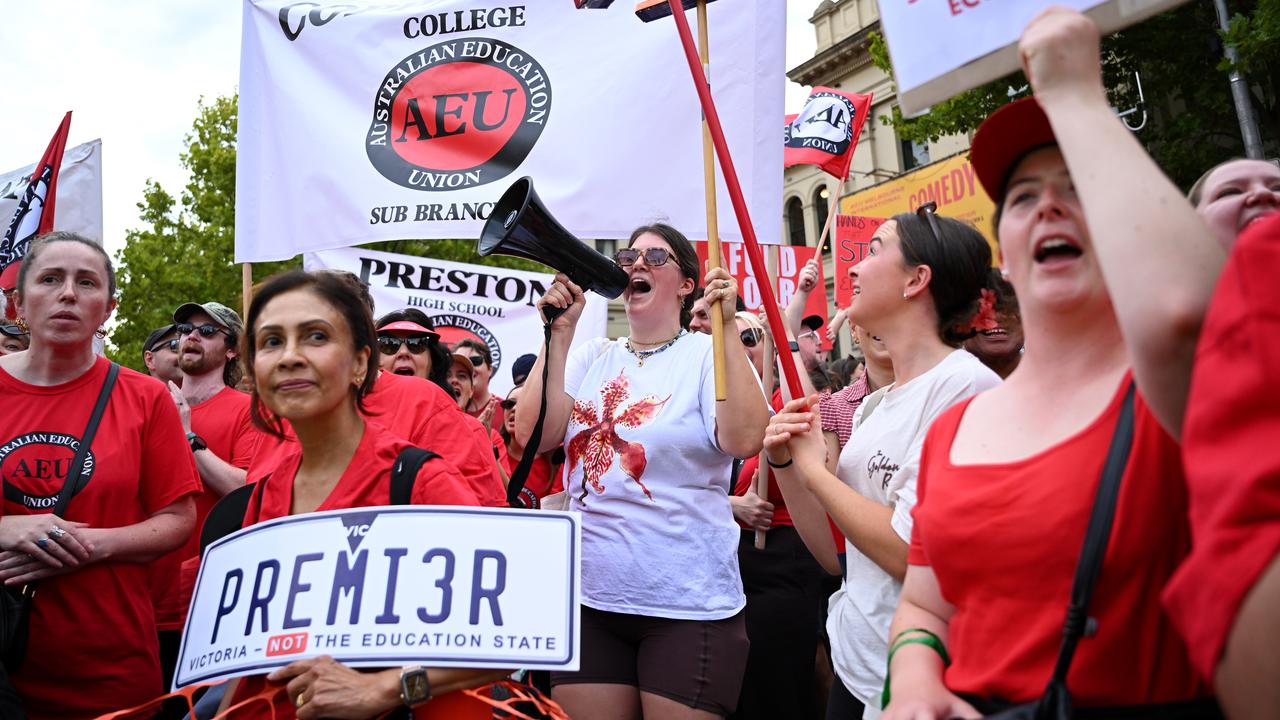
Unionised teachers, principals and other public school educators walked off the job across Victoria on Tuesday in search of better pay, with Tasmanian staff from the sector also taking industrial action.
All 1600 Victorian public schools were open but roughly 500 were significantly disrupted, with classes not running and children told to stay home if possible.
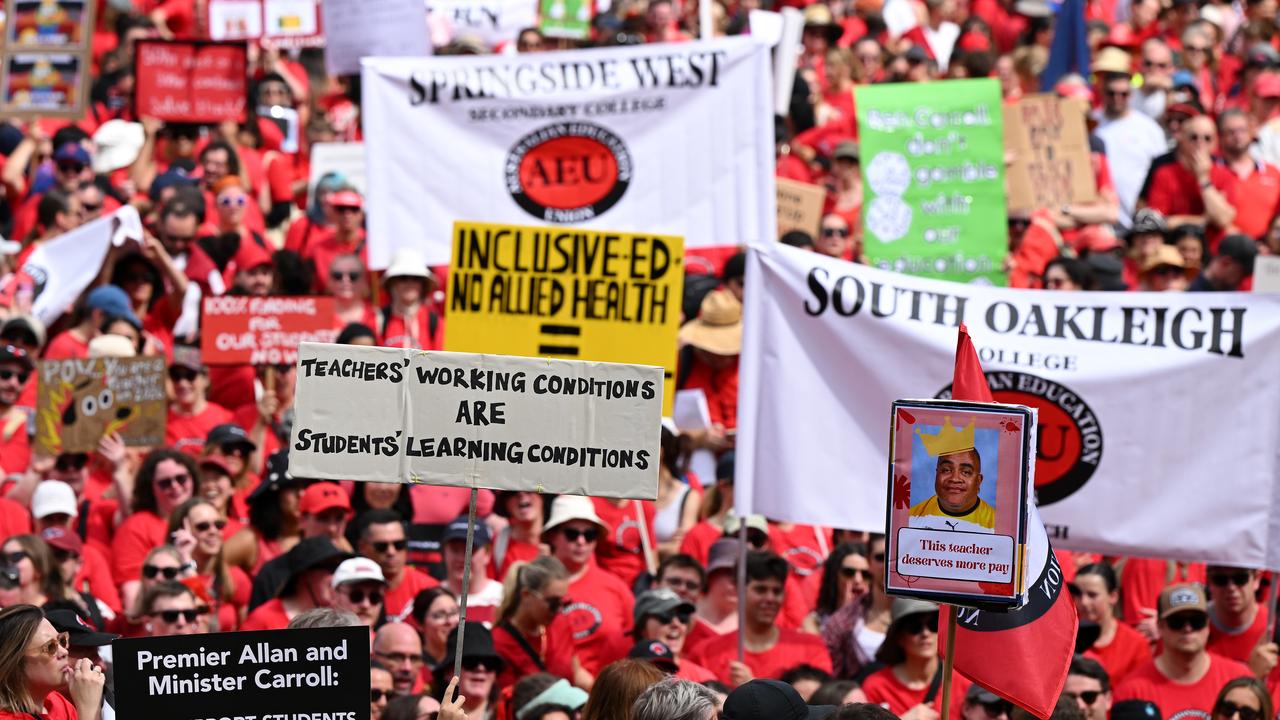
Police estimated about 35,000 people turned up for a Melbourne rally and march to the front steps of the Victorian parliament.
Victoria’s teachers union and state Labor government remain far apart on a pay deal after an offer of 18.5 per cent increase over four years was rejected.
The union wants a 35 per cent increase over the same period, along with measures to address excessive workloads and ongoing staffing shortages.
Members of the red-bathed crowd held homemade placards reading “Little Miss Underpaid”, “stop the funding con job” and “Allan government, re-do and resubmit” with a photo of Premier Jacinta Allan in a dunce hat.
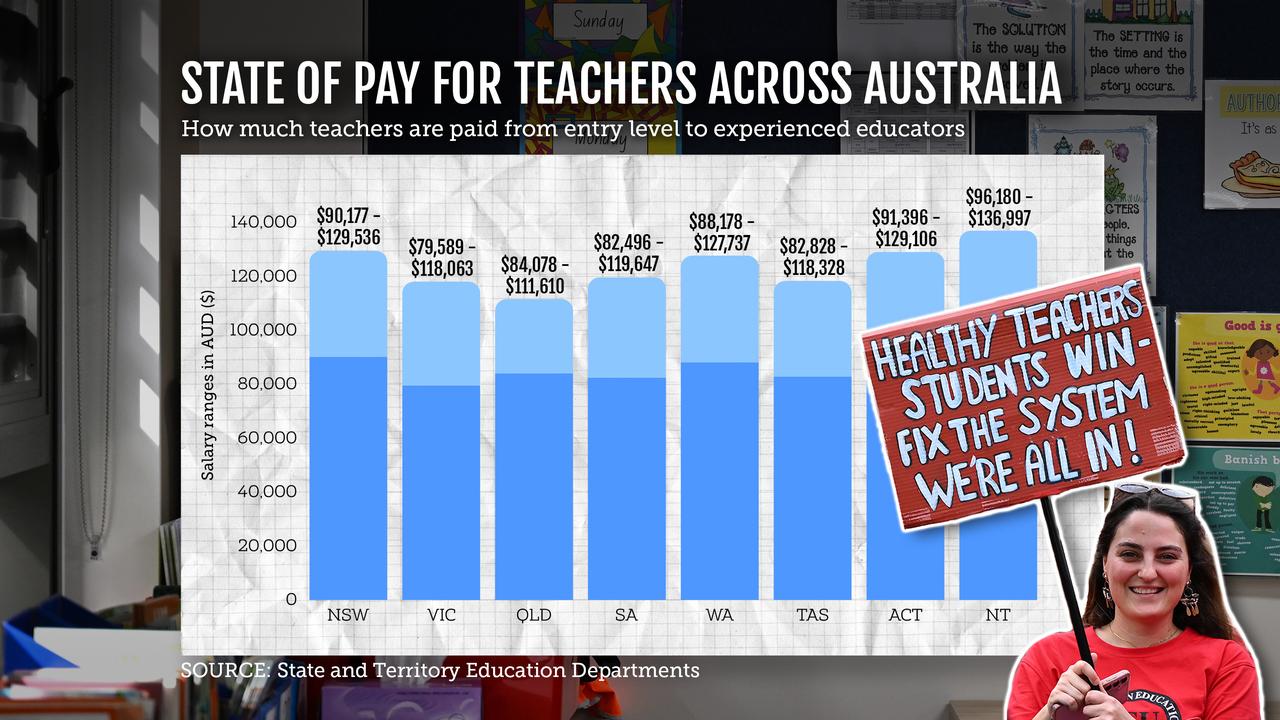
Entry-level teachers in Victoria are paid $16,500 less than those in the Northern Territory, the best-paid across the country.
Brogan, a primary school teacher on Melbourne’s Mornington Peninsula, said she and some single-mother colleagues were working through school holidays, either for fun or extra money on the side.
Staff at her school were spending their own cash on supplies and resources for student lessons as the budget wasn’t enough to cover costs.
“It could be something like glittery pens, or smelly markers or it could be stamps or ink – they all run out,” the grade one teacher, whose full name is not being used because she was not authorised by her employer to speak publicly, told AAP.
“It might be a small amount when you’re purchasing it but over the course of the year, it adds up.”
Emma De Klerk, a teacher from Aitken Primary School in Melbourne’s north, said the strike’s purpose went far beyond achieving a fair pay rise.
“We’re not here for us, we’re here for our students to get what they need and deserve,” she said.
Maddy Butler, who brought her two primary school children along to the rally, said the state government wasn’t spending enough on education.
“If we want the best outcomes for our children, we need to be giving our public schools the best funding and we need to be paying our teachers properly,” the Vic Parents for Public Schools organiser said.
The 24-hour teacher strike is Victoria’s first in more than 13 years and comes eight months out from the state election.
If the government doesn’t “do the right thing”, the education union warned more strikes were imminent.
“We’re going to stop work over multiple weeks, on multiple days in individual areas of the state,” Victorian branch president Justin Mullaly said.
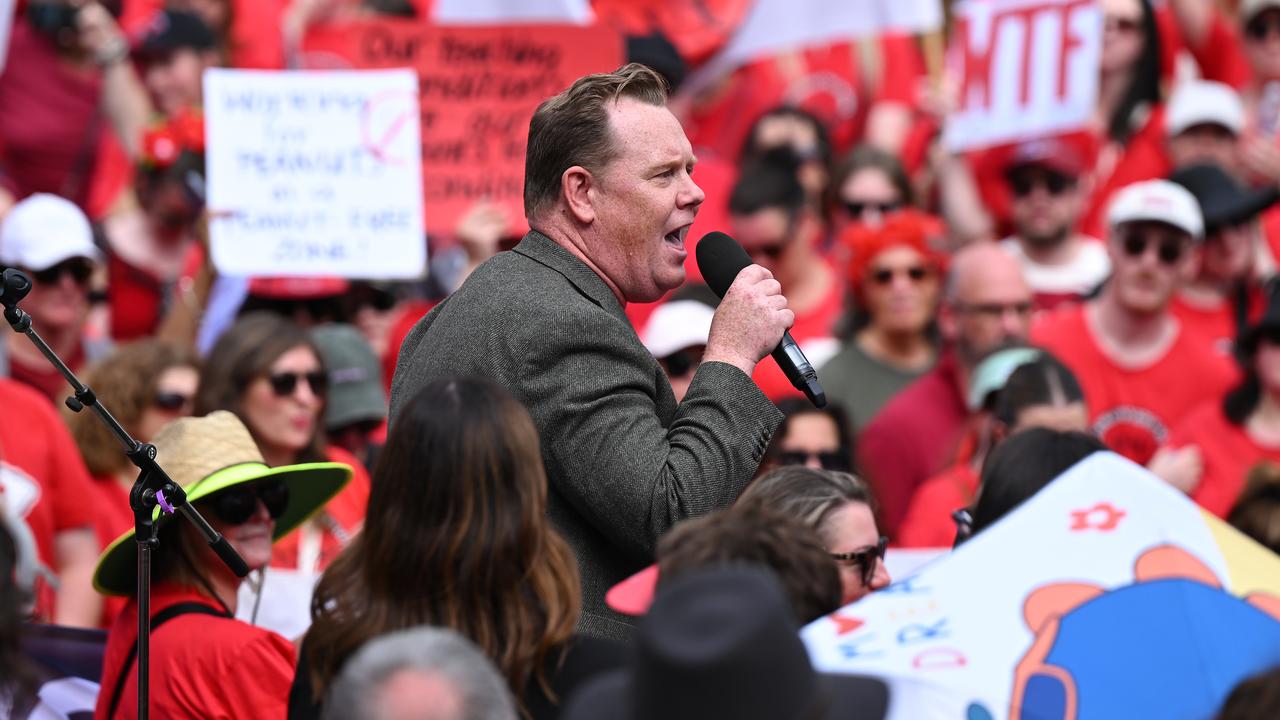
“For the premier and for the education minister to call Victoria the education state, it’s a complete joke.”
Education Minister Ben Carroll said the government’s initial offer equated to $2.6 billion in extra wages and would immediately lift educators’ pay by up to $11,000.
The government met with the union on Monday but did not table a revised offer and remains opposed to doubling the number of non-teaching days from five to 10.
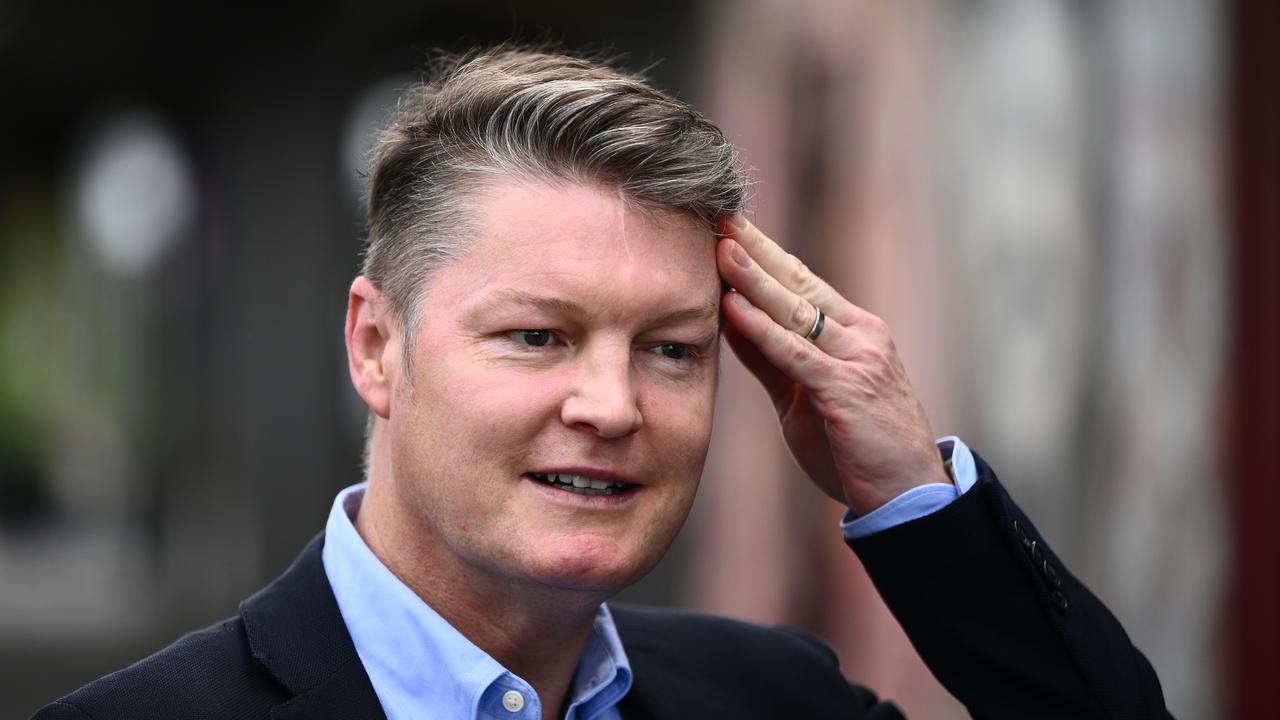
“We did everything we can to avoid today,” Mr Carroll told reporters.
Public schools were also closed in Tasmania’s northwest on Tuesday, the first of three days of teachers striking in parts of the state for improved pay and conditions.
Stop-work action will be move to the state’s north on Wednesday, followed by the south including Hobart on Thursday.
Tasmanian educators have asked for a 15.6 per cent pay rise over three years, along with a separate 5.95 per cent increase to achieve pay parity with other jurisdictions.

Australian Associated Press is the beating heart of Australian news. AAP is Australia’s only independent national newswire and has been delivering accurate, reliable and fast news content to the media industry, government and corporate sector for 85 years. We keep Australia informed.