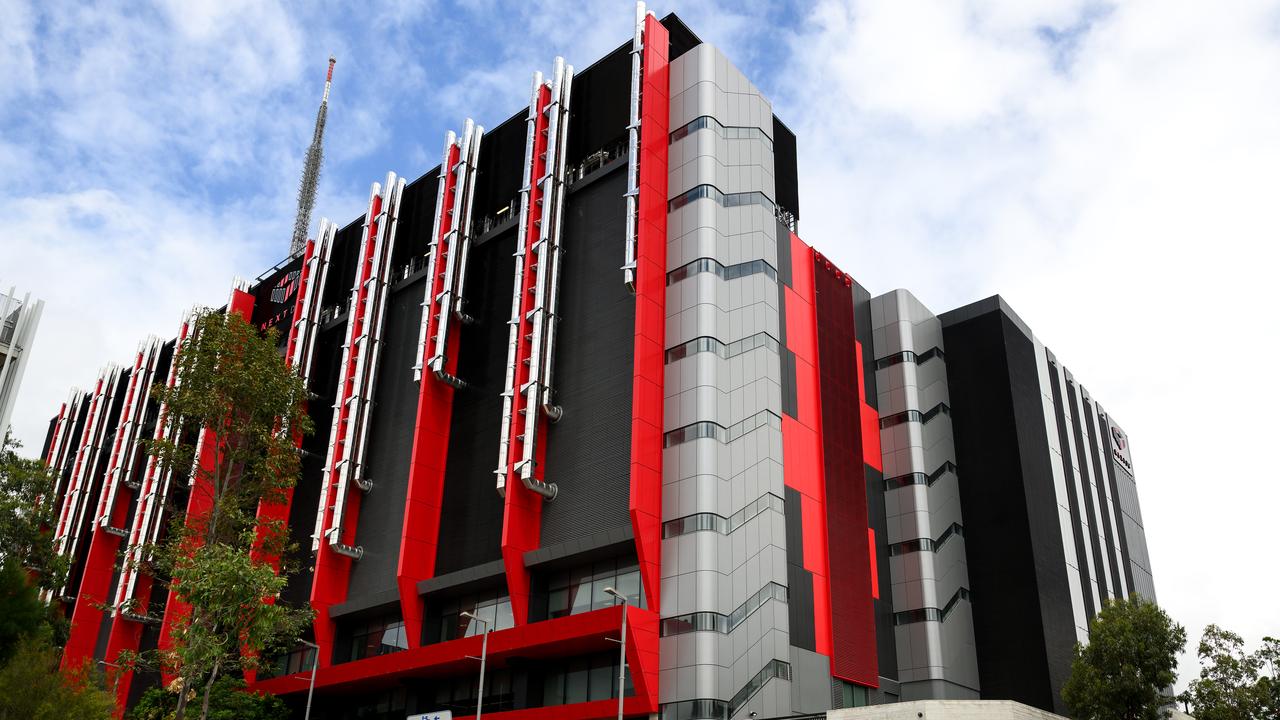
A data centre heavyweight has conceded the industry must work harder to assuage Australians’ concerns about the artificial intelligence boom or risk US-level community upheaval.
International and domestic data centre and AI leaders have descended on Melbourne for a three-day summit as state and federal governments continue to develop guard rails.
Bans and moratoria on data centres are spreading across the globe, including in US states and municipalities ahead of the mid-term elections in November.
The world is entering a “fourth industrial revolution”, with Australia uniquely placed to take advantage, NEXTDC chief executive and managing director Craig Scroggie said.
“But we have some bottlenecks that must be solved,” he told the crowd at the Melbourne Convention and Exhibition Centre on Tuesday.
“Social licence challenges and the questions about whether we should develop data centres could cause us to fundamentally make one of the biggest mistakes that we can make and that is to pause.
” … to not take advantage of this opportunity because of the fear and uncertainty of the headlines that have been imported from the US around data centres potentially using our energy assets or our drinking water.”

ASX-listed NEXTDC operates 17 data centres across Sydney, Melbourne, Brisbane and Perth.
Its 225MW site at Footscray in Melbourne’s inner west has faced opposition from some residents over noise, light and pollution concerns.
Local state MP Katie Hall wrote to Planning Minister Sonya Kilkenny in April to share community concerns about the company’s application to expand the centre, which she said was located within 500m of more than 800 homes, a kindergarten, maternal and child services and a local creek.
The Victorian Greens have since moved to introduce legislation to impose a moratorium on “hyperscale” AI data centre approvals across the state but it was blocked by Labor government MPs, including Ms Hall.
Artificial Intelligence Minister Anthony Carbines has been working on a policy paper, with announcements expected in the very near future.
“We need to make sure that … there’s a community licence and a social licence for them (data centres),” Premier Ben Carroll told reporters last week.
No community concerns should be dismissed and industry figures must educate the public on the benefits of digital infrastructure for jobs and economic growth, Mr Scroggie said.
“At no point in time in history have we ever had to explain how it works, and now the single most important thing we have to do is try to take the heat out of the conversation,” he told AAP.
“We can’t tell people who are yelling at the industry that AI is bad when they fear job loss or they fear displacement that they should just be calm.”
While acknowledging residents didn’t want big data centres in their backyard, NVIDIA’s Jared Carl said labour shortages were a major barrier to deployment.

A solution has been to build more of the facilities off site, reducing deployment time from 18 months to two years to seven to nine months.
“We’re still seeing payoffs of data centres being built between 18 and 24 months,” the technology giant’s global AI data centre lead said.
“That is a really fast time to get a return on your investment. After that, it’s just profit.”
In late August, national cabinet met to discuss consistent mandatory standards for data centre energy, water and land use.
Queensland and the Northern Territory appeared to receive a carve-out from mandates for centres to provide their own renewable energy, allowing for sites in those jurisdictions to be powered by coal and gas.
Federal Energy Minister Chris Bowen later clarified states and territories will have to prove they can find a cheaper source of power if they want to comply with the proposed federal laws.

Australian Associated Press is the beating heart of Australian news. AAP is Australia’s only independent national newswire and has been delivering accurate, reliable and fast news content to the media industry, government and corporate sector for 85 years. We keep Australia informed.