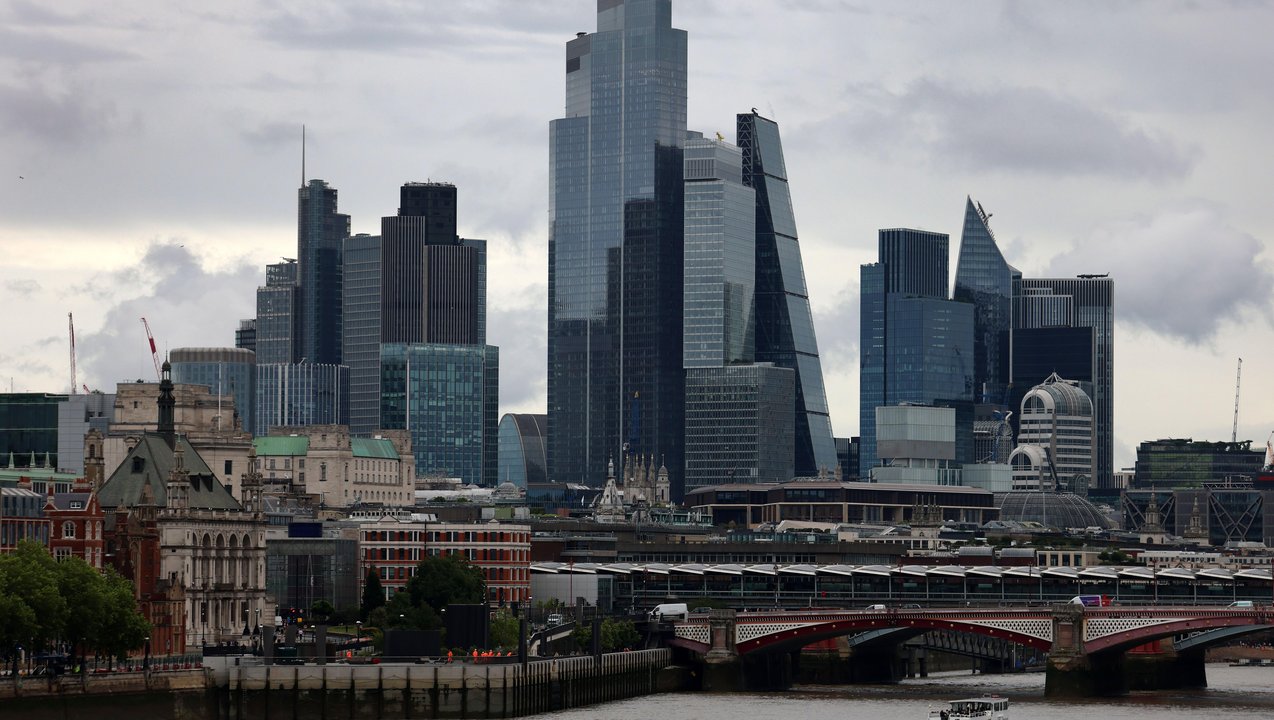
European stocks and US futures have fallen slightly and oil prices have dipped after Iranian negotiators said progress had been made in peace talks with the United States, helping calm fears the fragile process to end the Iran war was breaking down.
UK assets were steady after Prime Minister Sir Keir Starmer announced his resignation on Monday, paving the way for Britain’s seventh leader in 10 years.
The Iran war talks had earlier been overshadowed by Tehran’s announcement it had again closed the Strait of Hormuz, with shipping having slowed after US Central Command said 55 vessels passed on Saturday, prompting US President Donald Trump to threaten fresh attacks.
But officials from Qatar and Pakistan released a statement saying the first session of talks had concluded and progress had been made on a roadmap to reach a final deal in 60 days.
The apparent progress in discussions led Brent crude futures to shed early gains and ease 0.7 per cent to $80.07 a barrel, far below its May peak of $126.41.
Europe’s STOXX 600 index wavered and was last down 0.1 per cent, while US S&P 500 futures pared early losses to trade 0.1 per cent lower.
“There does appear to be further progress being made during talks in Switzerland towards a lasting settlement, and oil prices have dipped again,” said Susannah Streeter, chief investment strategist at Wealth Club.
“It is clear there is still a long way to go, and more obstacles may emerge before a long-term deal is signed.”
Asian stocks climbed overnight, supported by the apparent progress in peace talks.
Japan’s Nikkei rose 1.6 per cent, while South Korea’s red-hot market added 0.7 per cent, after surging more than 11 per cent last week on demand for semiconductor stocks.
The pound was down 0.1 per cent to $1.322 on Monday after Starmer announced his resignation, which had been widely rumoured at the weekend.
Former Manchester Mayor Andy Burnham is the favourite to succeed Starmer, and analysts said a key question for nervy UK bond markets would be who becomes finance minister.
“A new leader does not fundamentally alter the difficult fiscal situation they’re going to inherit,” said Nick Rees, head of macro research at Monex Europe.
“It’s what did for Starmer, and we are yet to see any credible plan as to how this will be dealt with.”
The euro eased 0.1 per cent to $1.146, after hitting a three-month low on Friday at $1.1418.
Treasuries remained under pressure following a hawkish turn by the Federal Reserve last week that led markets to price in a 75 per cent chance of a rate hike as early as September.
Futures imply around 38 basis points of tightening by year-end, while yields on two-year notes rose as much as four basis points to the highest since early 2025 at 4.230 per cent.
“Our baseline call is for patience and a first hike in the second half of 2027, but (we) believe the margin for error and the tolerance for further inflation is limited, with genuine risks of earlier hikes,” said Fabio Bassi, head of cross-asset strategy at JPMorgan.
The Fed’s hawkish outlook helped push the dollar up 0.3 per cent to 161.71 yen, with only the threat of Japanese intervention preventing the currency from rising to 2024’s 40-year high of 161.96.

Australian Associated Press is the beating heart of Australian news. AAP is Australia’s only independent national newswire and has been delivering accurate, reliable and fast news content to the media industry, government and corporate sector for 85 years. We keep Australia informed.